

Building a successful brand is not a one-time effort—it’s a strategic journey that evolves with your business. A well-structured Brand Development Blueprint acts as your roadmap, guiding you from initial discovery to sustainable growth. Whether you’re launching a startup or refining an existing brand, this blueprint ensures consistency, clarity, and long-term impact.
In this comprehensive guide, we’ll walk through each phase of brand development, practical strategies, and tools you can use to create a powerful and memorable brand.
What is a Brand Development Blueprint?
A Brand Development Blueprint is a structured framework that outlines how a brand is created, positioned, communicated, and grown over time. It covers everything from brand identity and messaging to audience targeting and long-term strategy.
Key Objectives:
- Define your brand identity
- Understand your audience
- Create consistent messaging
- Build trust and recognition
- Drive business growth
Why a Brand Development Blueprint Matters
Without a clear blueprint, branding becomes inconsistent and ineffective. Here’s why it’s essential:
- Consistency: Ensures uniform messaging across all platforms
- Clarity: Helps teams understand brand values and voice
- Recognition: Builds familiarity with your audience
- Trust: Establishes credibility over time
- Scalability: Supports long-term growth and expansion
Brand Discovery
Brand discovery is the foundation of your blueprint. It involves deep research and introspection.
1. Define Your Purpose
Ask yourself:
- Why does your brand exist?
- What problem are you solving?
- What impact do you want to make?
2. Identify Core Values
Your values shape your brand’s personality and decisions. Examples include:
- Innovation
- Transparency
- Sustainability
- Customer-first approach
3. Analyze the Market
Conduct competitive analysis:
- Who are your competitors?
- What are their strengths and weaknesses?
- What gaps can you fill?
4. Understand Your Audience
Create detailed customer personas:
- Age, gender, location
- Interests and behaviors
- Pain points and needs
Brand Strategy Development
Once discovery is complete, the next step is building a strategic framework.
1. Brand Positioning
Define how your brand stands out.
2. Unique Value Proposition (UVP)
Your UVP answers:
- Why should customers choose you?
- What makes you different?
3. Brand Voice and Tone
Decide how your brand communicates:
- Professional or casual
- Friendly or authoritative
- Emotional or informational
Expanded Section: Brand Identity Creation 
This phase is where your brand starts to take a tangible form. It translates your strategy into recognizable visuals and compelling communication that your audience can connect with. A strong identity not only makes your brand memorable but also builds trust and emotional resonance.
1. Visual Identity
Your visual identity is the face of your brand. It’s often the first thing people notice, and it plays a major role in shaping perception.
Logo
Your logo is the cornerstone of your visual identity. It should be:
- Simple and easy to recognize
- Scalable for different platforms (website, social media, print)
- Relevant to your industry and brand personality
- Timeless rather than overly trendy
A strong logo creates instant recognition and becomes synonymous with your brand over time.
Color Palette
Colors evoke emotions and influence decisions. Choosing the right palette helps communicate your brand personality.
- Blue: Trust, professionalism
- Red: Energy, urgency
- Green: Growth, sustainability
- Black: Luxury, sophistication
Use a primary color along with secondary and accent colors to maintain visual balance across all materials.
Typography
Fonts play a subtle but powerful role in branding. Your typography should:
- Be readable across devices
- Reflect your brand tone (modern, classic, playful, etc.)
- Include a consistent hierarchy (headings, subheadings, body text)
Limit your selection to 2–3 fonts to maintain consistency.
Imagery Style
Your brand’s imagery includes photos, illustrations, icons, and graphics. Define:
- Photography style (realistic, minimal, vibrant, etc.)
- Use of filters or color overlays
- Icon and illustration style
Consistent imagery strengthens brand recognition and creates a cohesive look across all platforms.
2. Brand Messaging
While visuals attract attention, messaging builds connection. It defines how your brand speaks and what it stands for.
Tagline
A tagline is a short, memorable phrase that captures your brand essence. It should:
- Be concise and impactful
- Highlight your unique value
- Be easy to remember
Example: A tagline can quickly communicate what makes your brand different.
Mission Statement
Your mission statement explains your purpose and what you aim to achieve. It should answer:
- What do you do?
- Who do you serve?
- How do you deliver value?
A clear mission keeps your brand focused and aligned.
Brand Story
People connect with stories, not just products. Your brand story should include:
- Why your brand was created
- The problem you aim to solve
- Your journey and vision
An authentic story builds emotional engagement and loyalty.
Tone and Voice
Define how your brand communicates:
- Formal vs. casual
- Friendly vs. authoritative
- Informative vs. inspirational
Consistency in tone ensures your audience always recognizes your brand voice.
3. Consistency Guidelines
Consistency is what transforms a good brand into a great one. Without it, even the best designs and messaging lose impact.
Brand Style Guide
A brand style guide is a document that outlines how your brand should be presented. It typically includes:
- Logo usage rules (size, spacing, placement)
- Color codes (HEX, RGB, CMYK)
- Typography rules
- Voice and tone guidelines
- Imagery standards
Why It Matters
- Ensures uniformity across all platforms
- Helps teams and designers stay aligned
- Builds trust and recognition with your audience
Practical Tip
Make your brand guide accessible to everyone involved in your business—designers, marketers, content creators, and partners.
Expanded Section: Brand Implementation
Once your identity is defined, the next step is execution. Brand implementation is about applying your identity consistently across all touchpoints to create a unified experience.
1. Website and Digital Presence
Your website is your brand’s digital headquarters. It’s often the first place customers interact with your business.
Key Elements:
- Design: Reflect your visual identity (colors, fonts, imagery)
- User Experience (UX): Easy navigation and fast loading speed
- Content: Clear messaging aligned with your brand voice
- Mobile Optimization: Ensure responsiveness across devices
Best Practices:
- Use consistent branding across all pages
- Highlight your value proposition clearly
- Include strong calls-to-action (CTAs)
Your website should not only look good but also deliver a seamless and meaningful experience.
2. Social Media Branding
Social media platforms are powerful tools for brand visibility and engagement.
Consistency Across Platforms:
- Use the same logo and profile image
- Maintain consistent color schemes
- Align tone and messaging
Content Approach:
- Share valuable and engaging content
- Use storytelling to connect with your audience
- Maintain a consistent posting schedule
Engagement Matters:
Respond to comments, messages, and feedback promptly. This builds trust and strengthens relationships.
3. Content Strategy
Content is how your brand communicates, educates, and builds authority.
Types of Content:
- Blog Posts: Educate and improve SEO
- Videos: Increase engagement and explain concepts visually
- Infographics: Simplify complex information
Content Goals:
- Provide value to your audience
- Establish thought leadership
- Drive traffic and conversions
Consistency is Key:
Create a content calendar to maintain regular publishing and ensure alignment with your brand message.
4. Customer Experience
Your brand is not just what you say—it’s what customers experience.
Touchpoints to Consider:
- Website interactions
- Customer support
- Packaging and delivery
- Post-purchase communication
Delivering on Your Brand Promise:
- Be reliable and transparent
- Provide excellent customer service
- Personalize interactions where possible
Why It Matters:
A positive customer experience leads to:
- Repeat business
- Word-of-mouth referrals
- Strong brand loyalty
Brand Identity Creation and Brand Implementation are where strategy meets reality. A visually appealing brand without consistent execution will fail to make an impact, while strong implementation without a clear identity leads to confusion. When both work together, they create a powerful, cohesive brand that stands out and grows sustainably.
Brand Growth and Expansion
A strong Brand Development Blueprint doesn’t stop at launch—it evolves.
1. Monitor Brand Performance
Track key metrics:
- Brand awareness
- Engagement rates
- Customer loyalty
2. Adapt and Improve
Use feedback and analytics to refine your strategy.
3. Expand Your Reach
Explore:
- New markets
- Partnerships
- Product lines
Key Elements of a Successful Brand Development Blueprint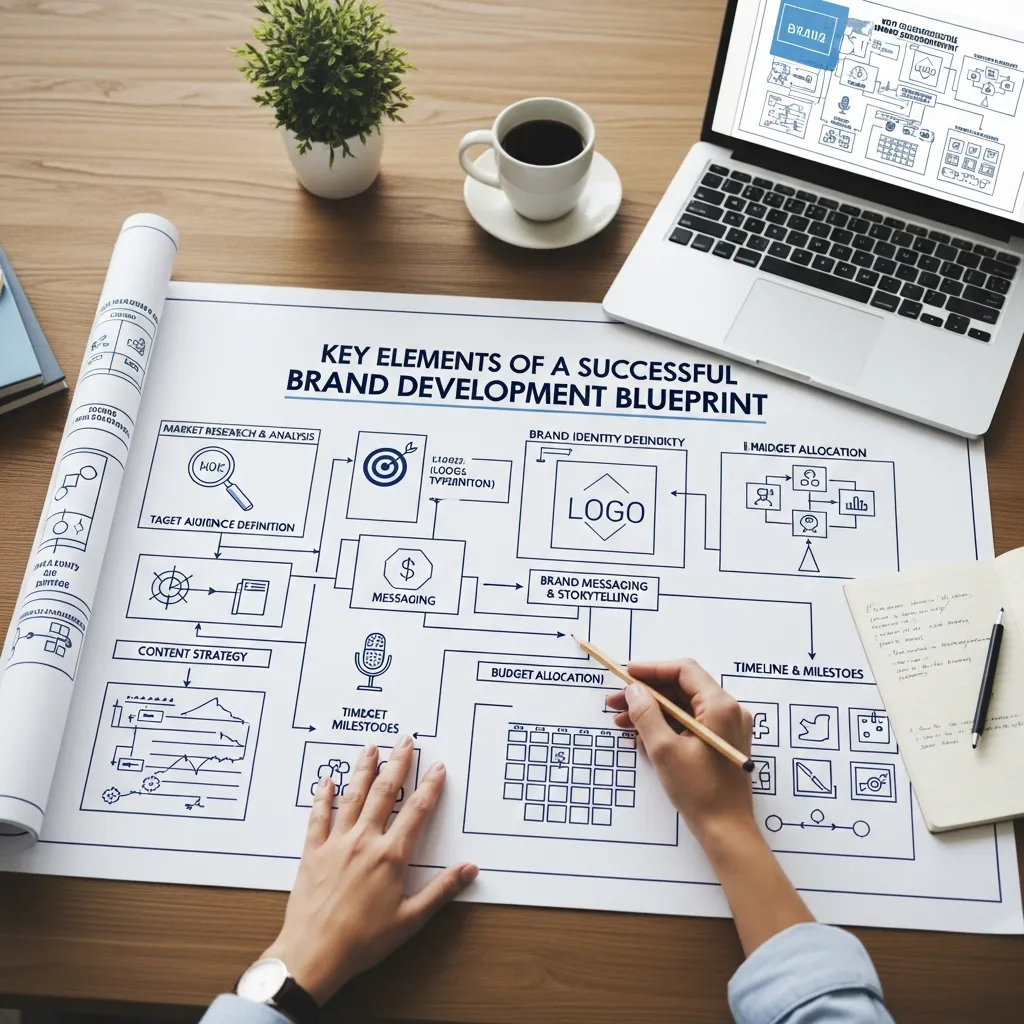
Essential Components:
- Clear mission and vision
- Defined target audience
- Strong visual identity
- Consistent messaging
- Data-driven strategy
Brand Development Blueprint Table
| Phase | Key Activities | Outcome |
|---|---|---|
| Discovery | Research, audience analysis | Clear brand foundation |
| Strategy Development | Positioning, UVP, messaging | Strategic direction |
| Identity Creation | Logo, colors, brand voice | Recognizable brand identity |
| Implementation | Website, content, social media | Market presence |
| Growth | Analytics, scaling, optimization | Sustainable brand expansion |
Common Mistakes to Avoid
- Lack of consistency: Confuses your audience
- Ignoring audience needs: Leads to weak engagement
- Overcomplicating messaging: Reduces clarity
- Neglecting brand guidelines: Causes inconsistency
- Failure to adapt: Limits growth
Tips for Long-Term Brand Success
- Stay authentic and transparent
- Continuously engage with your audience
- Invest in quality design and content
- Keep evolving with market trends
- Measure and optimize regularly
A well-crafted Brand Development Blueprint is the backbone of any successful business. It transforms your ideas into a cohesive identity, connects you with your audience, and drives sustainable growth. By following a structured approach—from discovery to expansion—you can build a brand that not only stands out but also stands the test of time.
Case Studies: Brands That Got It Right
Example 1: Patagonia
Patagonia built its brand on environmental activism. By aligning product innovation with ethical values and transparent supply chains, it cultivated a loyal community willing to pay premium prices and champion its mission.
Example 2: Slack
Slack disrupted enterprise communication by delivering a playful yet professional voice, intuitive design, and an engaging onboarding experience. Their consistent messaging—”Where work happens”—resonated with millions of users worldwide.
Common Pitfalls to Avoid
- Lack of Clarity: Vague messaging confuses customers.
- Inconsistency: A fractured brand experience weakens trust.
- Ignoring Feedback: Failing to listen to customers stalls growth.
- Overextension: Expanding too quickly dilutes brand focus.
FAQs: Brand Development Blueprint
1. What is a Brand Development Blueprint?
A Brand Development Blueprint is a structured plan that outlines how to create, position, and grow a brand effectively.
2. Why is brand development important?
It helps businesses build recognition, trust, and long-term customer relationships.
3. How long does it take to develop a brand?
It varies, but initial development can take weeks to months, while growth is ongoing.
4. What is brand positioning?
Brand positioning defines how your brand stands out in the market compared to competitors.
5. What is a unique value proposition (UVP)?
It’s the unique benefit that makes your brand different and valuable to customers.
6. How do I identify my target audience?
Through market research, customer data, and the creation of detailed buyer personas.
7. What are brand guidelines?
Some rules ensure consistent use of brand elements like logo, colors, and tone.
8. Can a brand evolve?
Yes, successful brands adapt to market trends and customer needs.
9. What tools can help in brand development?
Tools like analytics platforms, design software, and social media management tools are helpful.
10. How do I measure brand success?
By tracking metrics such as brand awareness, engagement, customer loyalty, and sales growth.
